

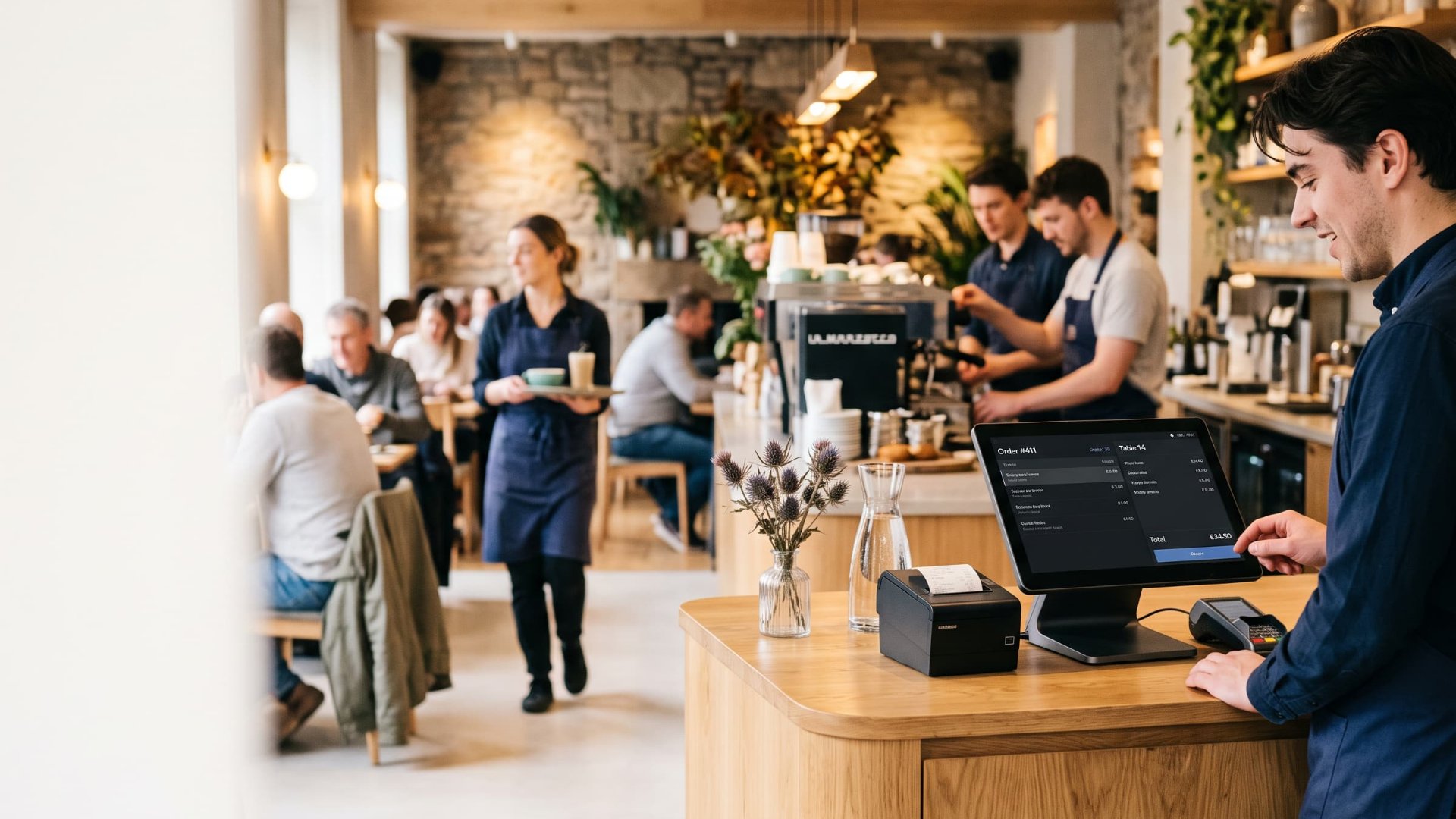
Is Your EPOS Making Things Harder Than They Need to Be?
in General October 7, 2026
Your EPOS system is supposed to make running your business easier.
But businesses change. Menus grow, staff change, new payment methods are introduced, online ordering is added and businesses sometimes expand into new locations or services.
Over time, the EPOS setup that once worked perfectly can start to feel less suited to the way the business operates.
That doesn't necessarily mean the system is bad. It may simply mean that your business has moved on while your EPOS hasn't.
When your business changes, your EPOS needs to keep up
An EPOS system is often installed when a business is in a particular stage of its development.
Perhaps you started with a single till and a straightforward menu. Then you added another terminal. Online ordering came along. You introduced handheld ordering or changed the way customers pay. Maybe you've opened another site.
None of those changes are particularly unusual.
The problem comes when the EPOS setup doesn't adapt with them.
Staff may have to use workarounds. Managers may have to check several systems to find the information they need. Simple changes can become time-consuming, and adding something new can create another layer of complexity.
At that point, it's worth asking a simple question:
Is your EPOS still helping your business, or are you working around it?
Signs your current EPOS may be holding you back
You don't necessarily need to replace an EPOS system because it is old. The more important question is whether it still does what your business needs.
There are several signs that it may be time to look at your options.
- Staff have developed workarounds. If your team has found its own way of dealing with limitations in the system, that's worth paying attention to.
- Simple changes are difficult. Adding products, changing prices or adapting your setup shouldn't become a major project.
- You're relying on several disconnected systems. If information has to be manually transferred between different systems, there may be a better way of connecting them.
- Your customers have more ways to order than your EPOS can handle easily. Counter orders, table orders, online orders and other channels may all need to work together.
- You don't have the information you need when you need it. Business owners and managers need to be able to see what's happening without unnecessary effort.
- Adding another site or service creates a headache. Expansion shouldn't mean rebuilding your entire technology setup from scratch.
None of these problems necessarily means you need a completely new system.
But they are good reasons to review what you currently have.
More technology isn't necessarily the answer
Upgrading your EPOS shouldn't mean adding features simply because they're available.
The right system is the one that fits the way your business actually operates.
A restaurant may need table ordering and kitchen integration. A takeaway may need online ordering and collection. A hotel may need EPOS integration with its property management system. A retailer may have completely different requirements.
There is no single setup that is right for every business.
That's why an EPOS review should start with the business rather than the technology.
What are you trying to achieve? Where are the current problems? What do your staff need? How do your customers order? And what might the business need to do in the future?
Once those questions have been answered, the technology becomes much easier to choose.
A modern EPOS can remove complexity
A well-configured EPOS system can bring more of your day-to-day operations together.
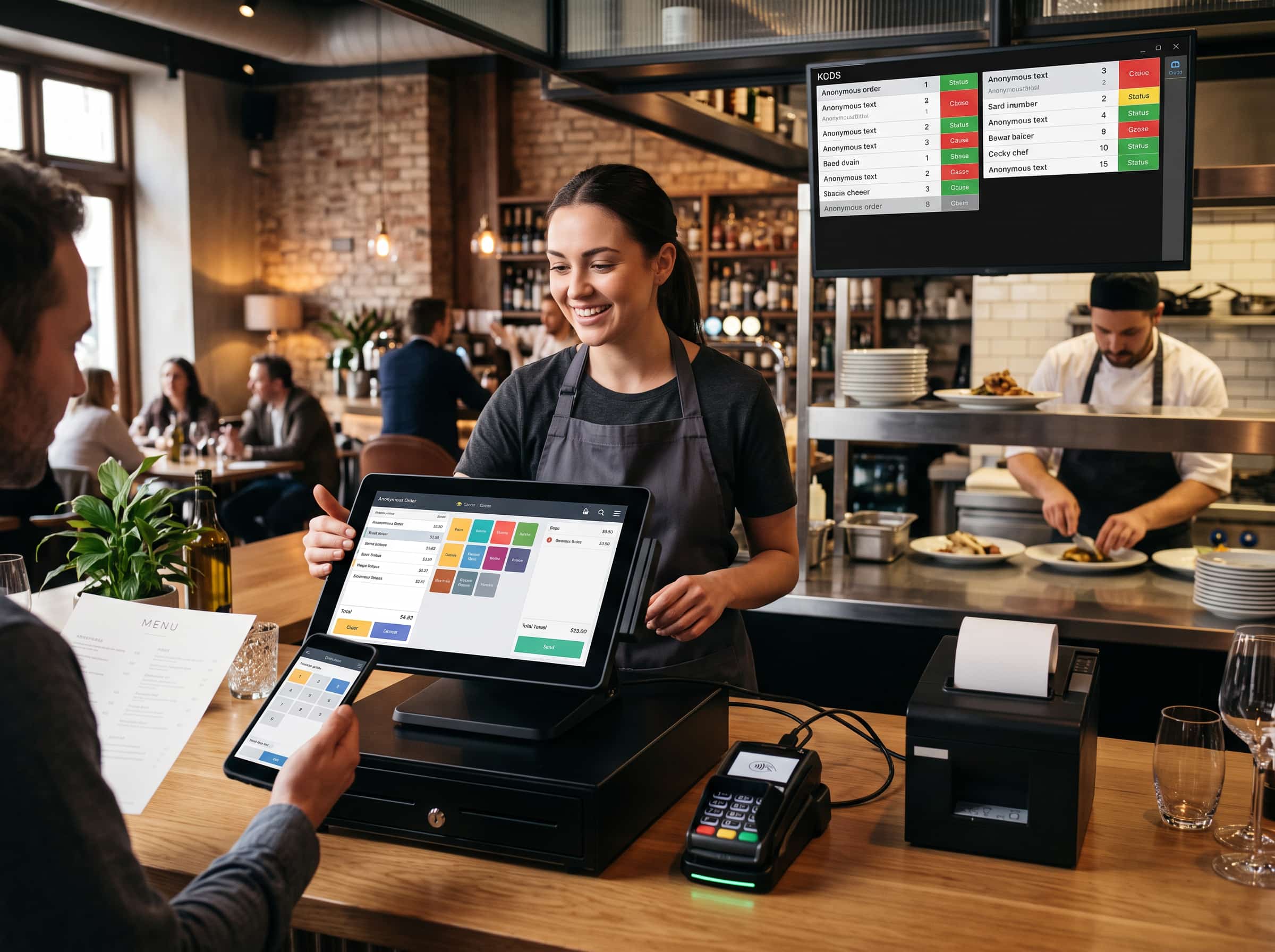
Orders can be taken at the till or through handheld devices. Orders can be sent directly to the relevant kitchen area. Payments can be processed through integrated terminals. Managers can access sales information and reporting without being tied to a single terminal.
The important point isn't the individual features.
It's how they work together.
Instead of creating another system for every new requirement, the aim should be to create a setup where the different parts of the business work from the same information.
That can mean fewer manual processes, fewer places to check and fewer things for staff to remember.

Your staff should be working with the system, not around it
Your staff use your EPOS every day.
They shouldn't have to understand the technical side of the system to use it effectively.
The buttons, menus, products and processes should make sense for the way they work.
If staff regularly have to remember special procedures because the EPOS can't accommodate the way your business operates, that's a sign worth taking seriously.
A properly configured system should reflect the business rather than forcing the business to adapt around it.
What about the information behind the till?
An EPOS system isn't only there to process transactions.
The information generated through everyday sales can help you understand what's happening across the business.
Managers may need to see sales, compare performance, monitor stock or understand how different parts of the business are performing.
If getting that information requires exporting data, checking several systems or waiting until you're back at a particular computer, your current setup may not be giving you everything it could.
Modern EPOS systems can give businesses much greater visibility, helping managers make decisions based on what is actually happening rather than relying on guesswork.
When should you consider an upgrade?
There doesn't have to be a major problem before you review your EPOS.
In fact, it can be better to look at your system before frustrations become serious enough to affect staff or customers.
A review can be particularly useful when:
- Your business has changed significantly since your current system was installed.
- You've introduced new ways for customers to order.
- You're opening another location.
- Your existing hardware or software is approaching the end of its useful life.
- Your staff are regularly working around limitations in the system.
- You want better access to sales and business information.
- You're using several systems that don't work well together.
An upgrade doesn't have to mean replacing everything at once.
Depending on the business, it may be possible to improve an existing setup, add new functionality or move to a more suitable EPOS solution.
The right EPOS should make your business easier to run
Your business doesn't stand still.
Customers change how they order. Staff change. Menus change. Businesses expand, adapt and introduce new services.
Your EPOS needs to keep pace with those changes.
The question isn't simply whether your current system is old.
It's whether it is still working the way your business needs it to.
If your team is spending time working around your EPOS rather than using it to support the business, it may be time to look at what's available today.
ACR EPOS Systems supplies EPOS solutions for hospitality, retail, hotels, takeaways, leisure businesses and other organisations across Scotland. We can help you look at your current setup and find an approach that fits the way your business operates.
Get in touch with ACR EPOS Systems to discuss your requirements.